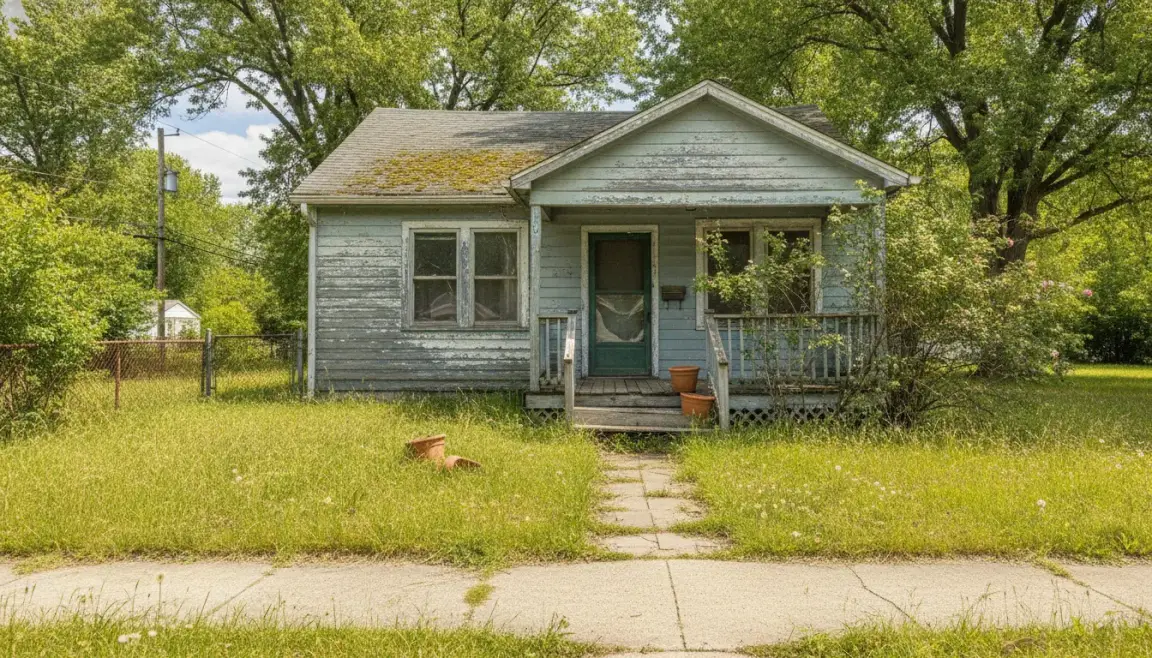

Selling a house in poor condition usually starts with one question. Do you spend money to make it easier to show, or do you sell it the way it sits? Peeling paint, an overgrown yard, and a kitchen that has not been touched in years can scare off retail buyers. They do not always mean the house is unsafe or illegal to sell. The useful first step is to sort the problems, then compare three paths before you hire a contractor.
Request a Metro Detroit cash offer
M1 Home Buyers is a local cash buyer based in West Bloomfield. We buy houses as-is in Oakland, Wayne, and Macomb counties. You do not have to repair, clean, or stage the house before a walkthrough. Most offers come back within 24 to 48 hours, and a closing is often set for 7 to 21 days if you accept. This guide covers the decision. If you want the short Detroit walkthrough, start with how to sell a Michigan house in poor condition.
What Poor Condition Means Before You Sell
Poor condition is not a single defect. It is a stack of issues that make an ordinary listing harder to finish. Some are cosmetic, while others affect safety, permits, or whether a buyer can finance the purchase. Separate those stacks before you choose a sale, because each one points to a different buyer.
Cosmetic neglect is the first stack. Picture stained carpet, dated cabinets, peeling paint, a tired bathroom, and a yard that needs a mower. Those items lower curb appeal, but they rarely stop a sale by themselves. A buyer who wants a move-in-ready house will discount them. A buyer who already plans to renovate may treat them as ordinary work.
Systems and structure are the second pile. A roof near the end of its life, a furnace that will not start, a wet basement, or a soft floor changes the buyer pool. Many mortgage lenders will not close if the house fails basic safety or habitability checks. That is a financing limit, not a ban on selling.
Known legal or safety issues are the third pile. Open code cases, unpermitted work, a failed septic system, or active water in the basement need their own plan. Those topics live on other pages, including selling a Michigan house with code violations and unpermitted work. If the house is physically damaged rather than simply neglected, the damaged-house cash offer page is the better fit.
Write down what you know before you call anyone. Note the room, the problem, and whether you have a repair quote. You do not need a formal inspection to start. You do need an honest list, because Michigan sellers answer a disclosure form from their own knowledge.
Three Ways of Selling a House in Poor Condition
Most owners are choosing among three routes. Each one trades money, time, and showings in a different way. None of them erases a mortgage payoff, a tax bill, or a title problem.
| Path | Prep you pay for | Showings | Typical buyer | Best fit |
|---|---|---|---|---|
| Repair, then list. | Chosen repairs, plus agent costs if you hire one. | Open houses and repeat visits. | An owner who will use a mortgage. | Light cosmetic work you can fund, plus time to wait. |
| List as-is. | Cleaning and access. Few or no repairs. | Still expected. Repair requests often come later. | An investor, or a buyer who can renovate. | You want the open market, but you will not fund a remodel. |
| Direct as-is sale. | No ordinary repairs, cleaning, or staging. | Usually one walkthrough. | A cash buyer who prices the work in. | You want fewer visits and a date you can plan around. |
A repair-then-list sale can reach more buyers. It also asks you to spend money before you know the final price. An as-is listing keeps you on the open market, but buyers still walk through, and many come back with repair demands. A direct sale skips the agent listing and the repair list. The offer is usually below a repaired retail price, because the buyer is taking on the work.
At M1, the direct path is a walkthrough, a written cash offer, and a closing date you help set. There is no fee to ask, and no duty to accept. If the house has several overlapping problems, read problem property options before you decide the cash route is the only one.
Run the Repair Math Before You Spend
Price the decision with numbers you can check, not a guess about what the house “should” bring. Use one repaired retail price, one as-is price, and the repairs you would actually pay for. Then subtract the costs that still apply in a traditional Michigan sale.
Michigan charges a state real estate transfer tax of $3.75 per $500 of value, or fraction of $500. That is $7.50 per $1,000. Counties also collect their own transfer tax, commonly $1.10 per $1,000. The usual combined rate is $8.60 per $1,000, and the seller is the person the law holds responsible.
- State transfer tax: $7.50 per $1,000.
- Typical county transfer tax: $1.10 per $1,000.
- Combined rate to check: $8.60 per $1,000, rounded up to the nearest $500 of value.
The state rate and the usual county add-on are summarized by the Ottawa County Register of Deeds. Confirm the county line with the register of deeds where the house sits. The full cost list lives on what it costs to sell a home in Michigan.
Run the comparison with your own numbers, not a guessed offer. Start with a repaired price you can support, then subtract three things: the repair bids you would actually pay, a commission if you hire an agent, and transfer tax at $8.60 per $1,000. Compare a direct offer with that net, not with the repaired headline. A higher retail price can still win. It only wins if the extra money survives the repairs and the sale costs. We will not put a dollar offer in this guide, because a real number depends on the house, the work, and the comps.
Change the inputs to your own quotes. If the repair bid is $4,000 and buyers are paying close to repaired prices, listing can be the better net. If the bid is $25,000 and you would still host showings for months, the as-is number may be cleaner. How much money you lose selling a house walks a separate net-proceeds example if you want the commission and tax math without the repair choice.
Disclosure Still Applies When the House Is Rough
Poor condition does not cancel Michigan’s Seller Disclosure Act, Act 92 of 1993. For most residential sales of one to four units, the seller completes the Seller’s Disclosure Statement in MCL 565.957. The form says to answer every question, report known conditions, and mark unknown when you do not know. It is a disclosure of what you know. It is not a warranty, and it is not an inspection.
You are not required to hire a specialist to hunt through inaccessible areas before you fill it out. MCL 565.955 says a seller is not liable for an error that was not in their personal knowledge, if ordinary care was used. If you do know about a leak, a bad roof, or a basement that floods, say so. Hiding it does not make a retail sale easier, and it can give a buyer a reason to walk away or fight the deal later.
The same statute notes that failing to give the buyer a signed disclosure can let that buyer terminate an otherwise binding purchase agreement. Some transfers are outside the act, including certain estate, lender, and government sales. If you are not sure your sale is covered, ask a Michigan real estate attorney before you skip the form. An as-is clause in a purchase agreement limits repair duty. It does not replace honest answers on the form.
What an As-Is Cash Sale Changes, and What It Does Not
An as-is cash sale changes the preparation, not the facts about the house. You skip the repair list, the staging, and the weekend showings. The buyer prices the condition into the offer instead of asking you to fix it first.
With M1, the usual order is simple:
- You tell us about the house and what you want from the sale.
- We walk the property as it is. You do not need to clean or repair it first.
- You get a written cash offer, often within 24 to 48 hours of that visit.
- If you accept, we set a closing, commonly 7 to 21 days, around your date.
- You sign, the payoff and taxes are handled at the closing table, and you hand over the keys.
Three things do not change. You still disclose what you know. A mortgage or lien still gets paid from the proceeds. The offer can be lower than a repaired retail price.
M1 does not charge a fee to make the offer, and you can say no. We buy houses in Oakland, Wayne, and Macomb counties.
If you want to see how a direct buyer looks at price, read how much cash home buyers pay in Michigan. For what the closing itself looks like, see what to expect when selling to a cash buyer and whether you pay closing costs.
Showings, Access, and Carrying Costs
A listing asks strangers into the house. On a neglected property, that usually means a lockbox, a yard that has to be passable, and several visits from agents and inspectors. If the house is vacant, each visit is another trip or another person holding a key. If you still live there, every showing is time away from work.
Carrying costs keep running while you wait. Mortgage payments, taxes, insurance, and utilities do not pause because the house needs paint. A two-month listing is not just a delay. It is two more months of those bills, plus any repair deposit you already paid. Put that number next to the offer before you decide the retail price is worth the wait.
Safety comes before either path. If a porch is soft, a basement has standing water, or the power is off, say so before a walkthrough. You do not have to fix it for M1 to look. You do need to warn people so nobody gets hurt walking the house.
Access is simpler on a direct sale, but it is not zero. We still need to see the rooms, the basement, the attic if it is safe to enter, and the yard. One visit is enough for an offer. You do not need to stage, paint, or haul junk out first.
How to Choose a Path This Month
Use a short test before you spend anything. If the first two lines are true and the third is not, get repair quotes and talk with an agent about a listing. If the third line is the one that matches your situation, ask for a direct offer and set it beside those quotes.
- The problems are mostly paint, flooring, yard, and dated finishes.
- You can pay for that work without borrowing against a sale that has not happened.
- You need to stop showings, carrying costs, or a deadline more than you need the last dollar of retail price.
Bring the same facts to every conversation: your condition list, any written repair bids, the mortgage payoff, and the date you want to be done. A useful offer or listing plan will respond to those facts. A pitch that ignores them is not a plan.
If you want a number next to the repair bids, contact M1 Home Buyers or call (248) 397-5800. We will look at the house as it is and give you a cash offer you can set beside the other options.
Frequently Asked Questions
Can I sell a house in poor condition without fixing it?
Yes. You can list it as-is or sell it directly to a cash buyer. Buyers using a mortgage may struggle if the house fails safety or habitability checks, so a cash buyer is often the path that does not ask you to repair first.
Do I still have to disclose problems if I sell as-is in Michigan?
In most home sales, yes. The Seller’s Disclosure Statement asks you to report conditions you know about. An as-is sale limits your duty to make repairs. It does not let you hide a problem you already know about.
Will I get full market value for a house that needs work?
Usually not, if “full market value” means the price of the same house after repairs. A cash offer subtracts the work, the risk, and the buyer’s costs. Compare that offer with your net after repairs, commission, and transfer tax, not with the repaired list price.
How fast can M1 close on a neglected Metro Detroit house?
After a walkthrough, offers are generally ready in 24 to 48 hours. If you accept, closings are often scheduled in 7 to 21 days, depending on the title work and the date you need.
Should I repair anything before I ask for an offer?
Not for an M1 walkthrough. Leave the house as it is, and keep any contractor bids you already have. Those bids help you compare a retail plan with the cash number. They are not a requirement to get the offer.