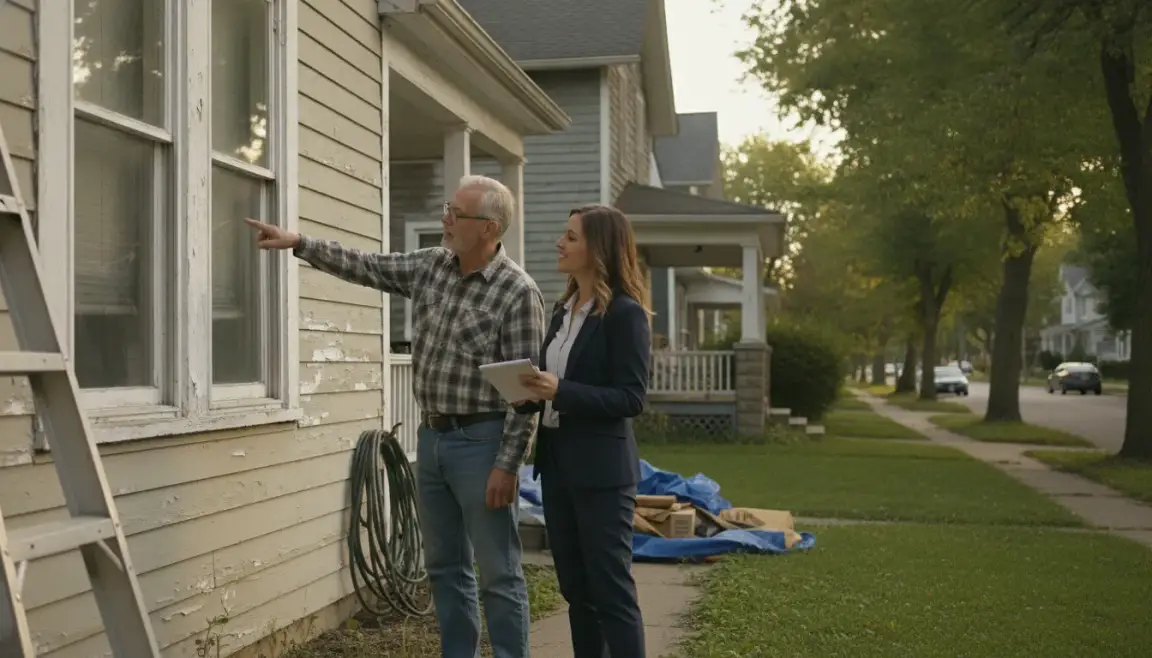

A code violation can make a home sale feel complicated, but it does not automatically prevent you from selling. The first step is to understand what the notice actually concerns, who issued it, and whether the issue is still open.
To sell house with code violations Michigan homeowners should gather municipal notices, permit records, inspection reports, and repair documents, then compare their options honestly. Depending on the property and local requirements, you may repair before listing, disclose the known condition and sell through the traditional market, or request an as-is cash offer. Michigan’s seller disclosure form requires sellers to report known property conditions and allows them to mark facts as unknown when they genuinely do not know them. Review the Michigan disclosure requirements and confirm current rules with the applicable municipality or a qualified professional.
Before deciding whether repairs are worthwhile, start by building a clear record of the property’s status. That information can reveal the difference between a correctable defect, an open municipal case, and a problem that needs specialized advice.
Request a no-obligation cash offer or call (248) 970-1051.
How to Sell a House With Code Violations in Michigan: Start With the Records
Before deciding whether to repair, list, or sell as-is, find out what the municipality actually has on file. A property defect, a municipal violation, an open permit, an unsafe-condition notice, and a possible condemnation are not interchangeable. A leaky roof may be a physical condition. An open permit may mean work was started but not closed out. A notice may ask the owner to correct a condition, while a condemnation process can involve a more serious determination about whether a property is fit for occupancy. The meaning, process, and deadlines can vary by Michigan city, village, or township.
Start by contacting the building, planning, code-enforcement, or housing department for the municipality where the property sits. Ask for the current status of every case, not just an old letter or a seller’s recollection. Request copies of notices, inspection reports, violation lists, permit history, reinspection requirements, and any information about fines, hearings, liens, or condemnation proceedings. The local office can explain which items remain open and what documentation is needed to close them.
A practical property-records checklist
- Confirm the property address, parcel number, and the department responsible for the record.
- Ask whether there are open code cases, blight tickets, unsafe-condition notices, or condemnation-related records.
- Check for open, expired, or unfinalized building, electrical, plumbing, mechanical, or demolition permits.
- Request the dates of inspections, correction notices, hearings, reinspection appointments, and stated response deadlines.
- Ask whether the municipality requires permits, licensed contractors, testing, photographs, or other proof before closing a case.
- Collect invoices, permits, receipts, contractor reports, inspection results, and correspondence connected to the issue.
- Write down the name of the municipal contact and confirm how records or status updates should be requested.
Detroit property owners have city-specific tools, including a searchable Blight Tickets dataset and a Blight Violation Case History search. These can help you research Detroit records, but they should not be treated as a statewide Michigan database. For a property in West Bloomfield, Grand Rapids, Lansing, Flint, or another community, use that municipality’s own department and records process. Detroit-specific information also does not replace a current conversation with the applicable city office.
Keep a clean file of what you know and what you do not know. Michigan’s statutory seller disclosure form is intended to address the property’s condition and information known by the seller. Its instructions say to answer all questions and report known conditions. If you do not know a fact, the form provides an option to mark it as unknown. Read the current form and consider advice from a qualified Michigan real estate attorney or other appropriate professional for questions about your situation: Michigan’s seller disclosure statute. Good records will not automatically resolve a violation, but they give you and any prospective buyer a clearer starting point.
What Should You Do About Repairs Before Selling?
Start with safety, not resale value. If the property has exposed wiring, an active leak, structural movement, no heat in cold weather. Or another immediate hazard, keep people away from the affected area and contact an appropriately qualified professional. A code notice can involve a safety issue, but it can also involve an open permit, an administrative requirement, or a condition that the municipality wants documented. Do not assume every notice requires the same response.
Get the scope in writing
Ask the applicable city, township, or county department what remains open and what documentation it needs. Then have a qualified contractor inspect the relevant work. Request a written scope that separates urgent safety work from recommended improvements, identifies materials and labor, and states whether permits or inspections may be needed. Get more than one estimate when the project is large enough to justify it. An estimate is useful for comparing options, but it is not a promise that the final cost or schedule will stay the same.
Permit questions deserve special attention. Requirements vary by municipality and by the work involved. Ask who is responsible for pulling a permit, arranging inspections, and obtaining any final sign-off. Keep copies of notices, permits, invoices, inspection results, photographs, and contractor communications. If a professional gives you advice about a legal, title, or code-enforcement issue, confirm it with the relevant authority or a qualified local professional.
Compare three reasonable paths
- Repair before selling: This may make sense when the work is manageable, improves safety, and supports the price or buyer pool you want. Build in room for delays and verify what the municipality considers complete. No one can promise that a violation will be cleared by a particular date.
- Disclose the condition and list the property: You may choose to market the home in its current condition or with a repair plan. Work with the appropriate real estate and legal professionals on disclosures, listing language, credits, and buyer requirements. Be precise about what you know, what is documented, and what remains unknown.
- Sell as-is: An as-is sale can avoid completing renovations before a walkthrough. M1 Home Buyers says it purchases homes needing repairs or renovation and evaluates the current condition, needed work, location, and comparable sales. The convenience has an economic tradeoff: its offers are generally just under market value because it assumes repair and resale risk. Read more about how to sell a house needing repairs for cash.
The best choice depends on your safety concerns, available cash, time, records, and tolerance for project risk. You do not need to choose a repair plan simply because a property has a violation. Compare the written costs and likely timing with the terms of each sale option, then confirm unresolved questions before signing.
What Michigan Sellers Need to Know About Disclosure
Disclosure is a practical documentation step when you sell a property with code concerns. It gives a buyer a clearer picture of what you know about the home’s condition, municipal notices, permits, repairs, and other issues. It does not require you to diagnose a problem that you cannot identify, and it does not mean you must present yourself as a construction or engineering expert.
Michigan’s statutory seller disclosure form is intended to communicate the property’s condition and information known by the seller. The form also explains that the seller’s representations are based on the seller’s knowledge at the time of signing. Review the current form and instructions from the Michigan Legislature, and confirm how it applies to your transaction with a qualified Michigan real estate attorney or licensed real estate professional when needed.
Before completing or signing anything, organize the information in a way that is accurate and easy to review:
- List known conditions. Describe code-related conditions, visible damage, unsafe areas, water intrusion, electrical or plumbing concerns, structural issues, and other facts you actually know. Include information from notices or prior conversations with the municipality. Use plain language and avoid minimizing a condition simply because it seems repairable.
- Mark unknown items as unknown. Do not guess about the age, cause, extent, or status of a problem. Michigan’s disclosure instructions direct sellers to answer all questions, report known conditions, and check UNKNOWN when they do not know the facts. If you later learn something material, ask a qualified professional how to update or communicate it.
- Gather notices and permit information. Keep copies of violation notices, inspection reports, permit records, correction orders, condemnation-related communications, contractor statements, and receipts. Contact the applicable city, township, or county to confirm current requirements, because code enforcement and open-permit procedures can vary by municipality. A notice is not necessarily the same thing as a physical defect, so keep those categories separate.
- Attach supporting pages. If the form does not provide enough room, add a clear explanation rather than omitting relevant information. Michigan’s form permits additional pages when more space is required, provided the added pages are signed. Label attachments by property and topic, and keep a complete copy for your records.
- Review the transaction documents with the right professional. The disclosure statement is information supplied by the seller, not generally a substitute for the purchase agreement. It is not a warranty, and it does not replace inspections or warranties a buyer may choose to obtain. Before signing, have a qualified Michigan real estate attorney or licensed professional review questions about your obligations, wording, permits, or a buyer’s requested terms.
Providing accurate information can reduce confusion later, but disclosure alone does not resolve a violation. The form is not a guarantee that the property meets current code, and it does not certify that every condition has been found. Keep the focus on what you know, what you do not know, and what records support your description. Michigan’s instructions also warn that failing to provide a signed disclosure statement can allow a purchaser to terminate an otherwise binding purchase agreement. So do not treat the paperwork as an afterthought.
Should You List the Property or Sell It As-Is?
There is no single best way to sell a Michigan property with code concerns. The right choice depends on the condition, the records you can document, your available time, and how much preparation you are willing to manage. A traditional listing may reach more buyers and could produce a higher gross price. However, it may also require repairs, showings, inspections, lender requirements, and negotiations. An as-is sale can reduce those steps, but the offer may be below market value because the buyer is taking on the property’s condition and related risk.
Use the comparison below as a starting point. Before choosing, confirm open permits, notices, and current requirements with the applicable city, township, or county. For more context, review the pros and cons of selling as-is.
| Option | Potential benefits | Tradeoffs | Questions to ask |
|---|---|---|---|
| Repair, then list. | May expand the buyer pool and support a stronger gross sale price if the work addresses buyer and municipal concerns. | Requires money, project management, permits when applicable, and time. Delays or unexpected conditions can increase the burden. | What work is required? Which repairs need permits? Can I verify completion and afford the carrying costs? |
| Disclose and list as-is | Provides broader market exposure without completing every improvement before marketing. Buyers can evaluate the home in its current condition. | Fewer buyers may qualify or feel comfortable proceeding. Inspections, financing, repair requests, credits, and negotiations can still affect the transaction. | What do I know and need to disclose? Will lenders accept the condition? How will inspection findings affect price or timing? |
| Direct as-is cash sale | Can avoid many listing steps, including repeated showings, lender financing contingencies, and an appraisal. The seller may have more control over timing and preparation. | The offer may be below market value. The buyer is pricing in repairs, holding costs, closing costs, and resale or rental risk. | What condition is being considered? What costs or commissions apply? Is the written offer voluntary, clear, and negotiable? |
When listing may make sense
Listing can be worth considering when the property is safe enough to show, the needed work is manageable, and you can absorb the time involved. Repairing first may improve buyer confidence, but it does not guarantee a particular price or outcome. Listing as-is keeps the home in its current condition, yet you should expect buyers to raise code questions during inspections and negotiations. Your disclosure and supporting records should accurately reflect what you know.
When a direct as-is sale may fit better
A direct sale may be more practical when you do not want to coordinate repairs. Clean or stage the home, schedule multiple showings, or wait through financing and inspection contingencies. M1 Home Buyers says it purchases residential properties directly for cash, including homes needing repairs or renovation. Its team evaluates condition, needed repairs, location, and comparable sales. M1 also states that offers are generally just under market value because it assumes repair and other ownership risks. Sellers receive a written offer with no obligation to accept it.
Whichever route you choose, compare the likely net result rather than the headline price alone. Include preparation costs, commissions, closing costs, carrying costs, your time, and the value of a predictable timeline. If you want to explore the direct route, learn how to sell a house needing repairs for cash before deciding.
How an As-Is Cash Sale Can Work With Code Issues
An as-is cash sale can give a Michigan homeowner another option when repairs, municipal notices, or unresolved code concerns make a traditional listing difficult. M1 Home Buyers is a small local business that buys residential properties directly from homeowners. It is not a real estate agent, and its role is to evaluate the property and make a purchase offer, not to provide legal or code-enforcement advice.
The first step is usually a walkthrough. You do not need to repair, clean, stage, or otherwise prepare the house before that visit. Be ready to share any notices, open-permit information, inspection reports, or other records you have. The more complete the information, the easier it is for the buyer to understand the property’s current condition and discuss the transaction honestly.
What M1 reviews before making an offer
M1 evaluates the home’s current condition, needed repairs, location, and comparable sales. Code issues may be part of that review, but a walkthrough does not guarantee that a property will be purchased. That a violation will be resolved, or that a particular offer will be available. Requirements can vary by city, township, and county, so confirm current municipal requirements with the applicable local office and consult a qualified professional for legal or code-specific questions.
After the walkthrough, M1 says a written cash offer is typically presented within 24 to 48 hours. The offer has no obligation attached, and the company says sellers can negotiate. Take time to review the proposed purchase agreement, identify how any code matters are addressed. And ask questions about title work, inspections, closing costs, and other transaction terms before signing.
Speed and convenience come with a tradeoff
A direct cash sale can avoid many steps associated with a financed listing, including repeated showings, lender financing contingencies, and an appraisal. M1 also states that it charges sellers no fees or commissions and pays closing costs. But current transaction terms should always be confirmed in writing for your specific sale.
M1 says closings generally occur in 7 to 21 days, with the date arranged around the seller’s situation and preferred schedule. That timing is not a guarantee. Title issues, municipal records, property questions, and the purchase agreement can affect the actual closing date.
The financial tradeoff also matters. Offers are generally just under market value because M1 assumes repair, holding, closing-cost, and resale or rental risk. In exchange, the seller may avoid making repairs or staging the property before selling. Compare the offer with your likely repair expenses, carrying costs, timeline, and alternatives. You can review how the cash home buying process works before deciding whether an as-is sale fits your situation.
A Practical Checklist Before You Accept an Offer
An offer deserves a careful review, especially when the property has open permits, municipal notices, or known code concerns. Use this checklist to organize the facts and compare the proposed path. It is not a substitute for advice from your municipality, title company, attorney, or other qualified professional.
Confirm the property records
- Ask the city, township, or village for the most current record of open permits, violation notices, tickets, hearings, deadlines, and any recorded action involving the property.
- Gather every notice, inspection report, permit, contractor invoice, repair estimate, and correspondence you have. Include documents that show work was completed, even if a final inspection or permit closure is still pending.
- Check whether the issue is a municipal notice, an open permit, a physical defect, or something more serious. Those categories can involve different next steps, and local requirements vary.
Separate safety work from cosmetic work
Make a short list of conditions that could affect immediate safety or access. Then list cosmetic improvements, cleanup, and upgrades separately. This helps you avoid spending money on appearance before you understand what the municipality or a buyer will actually need addressed. Ask the applicable department what must be corrected, what can remain as-is, and whether a professional inspection is appropriate.
Choose the sales path before negotiating
Decide whether you want to repair first, list the property in its current condition, or compare a direct cash sale. A traditional listing may provide broader exposure, but it can involve preparation, showings, inspections, negotiations, and buyer financing. An as-is option may reduce preparation, but the offer can reflect the buyer’s expected repair and resale risk. Reviewing the pros and cons of selling as-is can help you weigh those tradeoffs.
Ask specific questions about the offer
- How will the buyer handle the known code issues, open permits, and required municipal communication?
- Who will coordinate the title search, payoff information, closing documents, and any questions about liens or recorded matters?
- What closing date is proposed, and can it be adjusted to fit your move or other obligations?
- Which costs, fees, or commissions are included in the written terms?
- What happens if the title company, municipality, or buyer’s review identifies a new issue?
Finally, read the complete written offer rather than relying on a verbal summary. Confirm the price, contingencies, closing date, property condition language, responsibility for agreed work, and any cancellation terms. M1 Home Buyers explains how the cash home buying process works, including a condition review and written offer. You can compare it with other options and decide without pressure.
Explore an as-is option with M1 Home Buyers at (248) 970-1051.
Frequently Asked Questions
Can you sell a house with code violations in Michigan?
Often, yes. A code violation does not automatically prevent a sale, but it can affect the buyer pool, financing, price, and closing process. First identify whether the issue is an open permit, municipal notice, safety concern, or another property defect. Ask the applicable city or township for current records and requirements, then disclose known information and discuss the options with a qualified local professional.
Do you have to fix code violations before selling in Michigan?
Not necessarily. The answer can depend on the municipality, the type of violation, the purchase agreement, and the buyer’s financing. You may be able to repair the issue, negotiate a credit or price adjustment, or sell the property as-is. Confirm current requirements with the local code department rather than assuming that an older condition is exempt or that a sale will resolve the violation.
What should you disclose when selling a house with code violations?
Michigan’s statutory disclosure instructions tell sellers to answer all questions and report known conditions. If you do not know a fact, the form allows you to mark it UNKNOWN. Keep copies of notices, permits, invoices, inspection reports, and correspondence, and attach signed additional pages if more space is needed. The disclosure statement is not a warranty or a substitute for an inspection. Review the Michigan statutory disclosure form.
Can a cash buyer purchase a house that will not pass inspection?
Some direct buyers evaluate homes in their current condition and may consider properties needing repairs or renovation. M1 Home Buyers says it buys residential properties directly for cash and does not require sellers to repair, clean, stage, or prepare before a walkthrough. The offer depends on the property’s condition, needed work, location, and comparable sales. So compare the written terms carefully and remember that you are never required to accept an offer.
Get Started on Your Michigan Home Sale
If you want to review an as-is option, M1 Home Buyers can provide a straightforward next step without pressure. Request a no-obligation cash offer or schedule a free walkthrough, then decide whether and when to proceed based on your situation. You can contact M1 Home Buyers at (248) 970-1051 to get started. There is no obligation to accept an offer, and you remain in control of the timing.