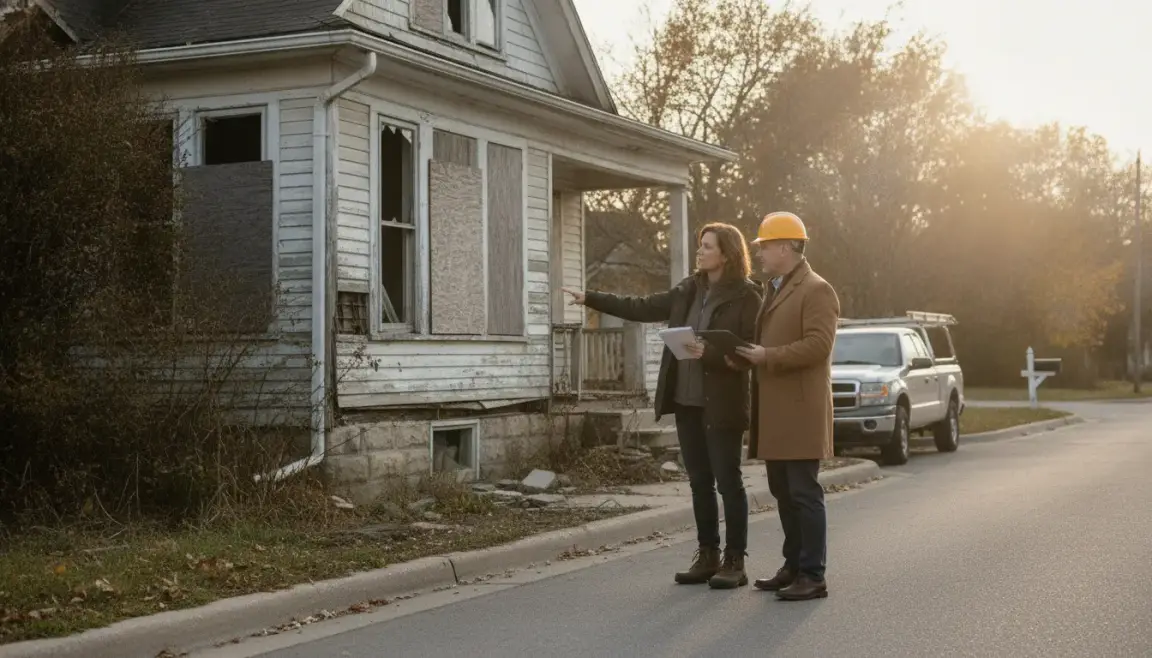

Sell Condemned House Michigan: Your Options
If you are searching for “sell condemned house Michigan,” a condemnation order does not always end the conversation. The first question is what kind of condemnation you are facing. A local order based on unsafe conditions, code violations, or uninhabitable conditions is different from eminent-domain condemnation, where the government seeks property for public use. Those situations involve different rights, timelines, and professional guidance.
Request a no-obligation walkthrough for your condemned house. Call M1 Home Buyers at (248) 970-1051.
In many situations, Michigan owners may be able to sell a condemned house. But the sale still requires an honest review of the municipal order, occupancy restrictions, title, permits, safety concerns, and required repairs. Rehabilitation, a traditional listing, or an as-is sale may each be possible, depending on the property and local requirements.
Before choosing a selling path, get the actual order and ask the city or township what must happen next. Understanding what the municipality has declared, what access is allowed, and whether repairs or demolition are involved gives you a clearer foundation for evaluating your options.
How Michigan Owners Can Sell a Condemned House
A condemnation order is an official government action, but the reason behind it matters. In one situation, a local authority may determine that a home is unsafe or uninhabitable because of its physical condition. In another, the government may pursue the property for a public project through eminent domain. Those situations involve different questions, procedures, and risks for an owner considering whether to sell condemned house Michigan.
A physical-condition condemnation generally means that the municipality has identified serious concerns with the property or its habitability. The order may restrict occupancy or require the owner to correct specified conditions. It does not automatically mean the structure must be demolished, and it does not by itself answer whether a sale can proceed. The actual order, local ordinances, deadlines, title status, and any court or agency involvement should be reviewed before an owner signs a purchase agreement.
That is different from a home that is damaged, vacant, or in need of major repairs but has not been formally condemned. A fire-damaged house, long-vacant property, or home with code concerns may be difficult to insure, finance, or sell through the traditional market. However, those facts alone do not prove that a condemnation order exists. Ask the relevant city, township, or county department for the current written status rather than relying on a neighbor’s description, an old notice, or a listing remark.
Eminent-domain condemnation is a separate legal concept. It is not based on whether the house is clean, occupied, or structurally sound. Instead, it is the legal action a government may use to acquire private property for a public purpose. Michigan’s Department of Transportation explains that eminent domain involves taking private property for public use, with just compensation made or secured as required by law. You can review the Michigan MDOT condemnation and eminent-domain overview for the state’s explanation of that process.
If your notice relates to a public project, speak with an attorney experienced in condemnation or eminent domain before negotiating away rights or accepting compensation. If it relates to physical conditions, start with the issuing municipality. Determine exactly what is prohibited, what corrections are required, and whether an inspection or permit is needed. A damaged or vacant home may have sale options. But an owner should not assume that selling transfers every obligation or makes the property legal or safe to occupy. The written government record is the starting point for understanding the path forward.
What Should You Verify With the Municipality First?
Before deciding whether to repair, list, or sell a house with code violations, get the municipality’s current records and instructions in writing. A condemnation label can involve unsafe conditions, occupancy restrictions, code enforcement, or a separate legal matter. The exact process depends on the city, township, village, and the facts of the property. Treat this as a due-diligence checklist, not a substitute for advice from municipal officials, an attorney, an inspector, or licensed contractors.
- Obtain the complete notice or order. Ask the building, code-enforcement, or community-development department for a copy of every active notice, order, hearing document, and violation list. Confirm the date issued, the property address and parcel number, the stated reasons, and whether the document applies to the entire structure or only a portion. Do not rely on a prior owner’s summary or a sign posted at the property. Ask whether any later amendment, appeal, inspection report, or court filing changes the current status.
- Ask whether the property is unsafe to enter or occupy. Clarify whether anyone may live in the house, enter it without an escort, remove belongings, or perform work before an inspection. Some hazards may not be obvious from the outside. If officials restrict access, follow those instructions and use qualified professionals rather than entering an unstable structure on your own. A sale does not make the property safe or automatically authorize occupancy.
- Identify every correction deadline and required response. Ask for the exact deadline to correct violations, submit a plan, request an inspection, attend a hearing, or respond to the municipality. Get the answer in writing, including what happens if the deadline is missed. Do not assume a commonly quoted period, such as 30, 60, or 180 days, applies to your property. Local rules and the notice itself control. Ask whether the deadline can change after a sale and who must receive future notices.
- Confirm the inspection, permit, and approval sequence. Ask which permits are required for structural, electrical, plumbing, mechanical, environmental, or other work. Find out whether plans must be prepared by a licensed professional and whether a pre-work inspection is required. Ask which inspections or certificates must be completed before the municipality considers the corrections. Confirm how final approval is documented. A contractor’s statement that work is complete is not necessarily the same as municipal approval.
- Clarify any demolition language before authorizing work. Determine whether the order recommends demolition, requires a separate hearing, or merely identifies conditions that must be addressed. Ask whether partial demolition, emergency stabilization, debris removal, or tree and utility work needs separate permission. Before tearing down any part of the structure, confirm applicable codes, permits, utility procedures, historic or environmental restrictions, and responsibility for securing the site. Michigan’s unsafe-building statutes can be reviewed through the Michigan Legislature, but the municipality should explain how its current order applies.
- Document the property’s status as of today. Keep dated copies of notices, inspection reports, permits, photographs, emails, names of officials, and notes from every call. Ask the municipality to identify open violations, unpaid enforcement charges, scheduled hearings, active permits, and whether a certificate or written clearance is available after work. Give this file to your title company, attorney, inspector, contractor, and any prospective buyer. If you are considering selling, disclose the known order and verify what your professionals say must be resolved before closing.
Municipal confirmation is especially important because the practical path can change with one detail, such as an occupancy ban, an imminent hearing, or a required permit. Keep asking specific questions until you know what is active, what is permitted, and what remains your responsibility. No buyer or marketing description should promise that an order can be removed without the municipality’s written determination.
What Documents and Property Issues Can Affect the Sale?
A condemnation notice is only one part of the file a buyer, title company, and municipality may need to review. Before choosing a sale path, gather the documents that explain what happened, who has authority to sell, and what must be corrected. A clear file can reduce surprises without suggesting that paperwork alone makes an unsafe property legal to occupy.
Start with the notice, order, and code records
Keep every condemnation notice, unsafe-building order, hearing notice, inspection report, and correspondence from the city, township, or other enforcing agency. Ask the issuing authority to confirm the current status, the specific violations, whether occupancy is prohibited, and whether there are deadlines, access restrictions, repair requirements, or demolition language. Local procedures vary, so do not rely on a general online checklist. If the property also has code violations, this guide explains how to sell a house with code violations.
Confirm title, liens, and ownership authority
A title search can identify mortgages, unpaid taxes, judgments, municipal liens, estate claims, or other matters that affect closing. Bring the deed, mortgage information, tax records, and any lien notices to a title company or real estate attorney. The seller may need to resolve title issues before selling. If more than one person owns the property, confirm who must sign. A power of attorney, trust, divorce order, or corporate ownership can require additional documentation.
Check permits, inspection, and insurance
Collect permits and final approvals for past additions, electrical work, plumbing, roofing, structural repairs, or other major projects. Ask the municipality whether open permits or unpermitted work must be addressed. A qualified inspector and licensed contractors can document visible and hidden conditions, estimate the repair scope, and identify urgent structural or electrical risks. Do not enter a restricted or dangerous structure without following the municipality’s access requirements.
Also ask your insurer whether coverage remains in force and whether vacancy, fire, water, or condemnation changes the policy. Record the status of electricity, gas, water, and winterization. Utility shutoffs may affect inspection access and can create additional safety concerns.
Prepare disclosure and probate documents
Be candid about known defects, notices, orders, water or fire damage, and repairs. Michigan sellers should review the applicable disclosure requirements and property-specific questions with a qualified professional. The Michigan Legislature’s seller disclosure statute is a starting point, not a substitute for legal advice.
If the owner died, the personal representative may need authority to sell, address creditor claims, or obtain court approval. Learn more about how to sell a house in probate. These checks do not guarantee a sale, but they help every serious buyer evaluate the property and the transaction honestly.
Which Selling Path Fits Your Situation?
There is no single best way to sell a condemned property. The right choice depends on your available cash, the extent of the work, your deadline, and what the municipality requires before the property can be occupied or cleared. A realistic comparison also needs to account for title, permits, notices, and disclosure responsibilities. Choosing an as-is sale does not automatically cancel a municipal order or remove the need to disclose known conditions.
Each path below can help an owner evaluate the sale. Local requirements still control the transaction.
| Selling path | Upfront work | Likely buyer pool | Timing and price uncertainty | Municipal and title responsibilities |
|---|---|---|---|---|
| Rehabilitation | Often requires contractor estimates, permits, inspections, funding, and coordination of repairs. Safety and structural work may need to come first. | After the property meets applicable requirements, it may appeal to more traditional owner-occupant buyers and lenders. | Work can take longer than expected, and the eventual value depends on the completed scope, market conditions, and costs. | You still need to work with the municipality, complete required corrections, and resolve title or permit issues. Repairs do not end an order unless the local authority accepts them. |
| Traditional listing | You may choose limited cleanup or repairs, but the listing must present the condition honestly. Access, insurance, and showing safety also need attention. | The pool may be narrower when buyers or lenders are concerned about repairs, safety, financing, or liability. | Marketing, inspections, negotiations, and buyer financing can extend the timeline. The final price may be uncertain until a qualified buyer completes due diligence. | The order, known defects, permits, liens, ownership records, and applicable disclosure duties still require review. A listing does not transfer those questions out of existence. |
| As-is direct sale | Usually avoids seller-managed renovations, but you still need to provide available information and allow property, title, and municipal review. | Most likely to interest buyers prepared to evaluate repair, holding, and resale risk, rather than buyers seeking a move-in-ready home. | May simplify the path when the buyer and title professionals can work with the property issues. The offer reflects condition and risk, so it may be below a repaired property’s potential market value. | An as-is agreement does not make the property safe to occupy, remove a condemnation order, erase liens, or eliminate disclosure and title responsibilities. Confirm the requirements with the relevant professionals. |
A practical way to choose
Start with the facts, not the hoped-for sale price. Ask the municipality for the current order, correction requirements, inspection process, and any demolition or occupancy language. Then compare a qualified repair estimate with the cost of carrying the property during the work. If rehabilitation is financially realistic and you can manage the schedule, it may preserve more upside. If you want broad market exposure and can tolerate a less predictable closing, a traditional listing may be appropriate.
An as-is direct sale may deserve consideration when repair funding, access, time, or project management is the central problem. Get the agreement reviewed through the normal title and closing process, disclose what you know, and confirm which obligations remain after a sale. The best path is the one that fits your resources while keeping the property and transaction compliant.
What Does an As-Is Cash Sale Look Like?
An as-is cash sale can be one option for an owner who wants to sell a condemned house in Michigan without completing every repair first. “As-is” describes the condition the buyer is agreeing to evaluate. It does not automatically cancel a municipal order, make the property safe to occupy, or remove title and ownership problems. The sale still needs to account for the property’s condition, the condemnation notice, access and safety concerns, and the requirements of the municipality and closing professionals.
With M1 Home Buyers, the process starts with a conversation about the property and the seller’s situation. After scheduling, a representative typically completes a property walkthrough. That visit helps M1 evaluate the location, current condition, needed repairs, and comparable local sales. A condemned property may have restricted or unsafe areas, so access should be discussed in advance and handled in a way that does not put anyone at risk.
After the walkthrough, M1 says it generally provides a written cash offer within 24 to 48 hours. The seller can review, negotiate, accept, or reject the offer. There is no requirement to clean, stage, renovate, or prepare the property for repeated showings under this process. The goal is to evaluate the house as it stands, including the work and risk a buyer may need to take on.
If the seller accepts, the transaction moves toward closing. M1 says closing is typically completed in 7 to 21 days, with the date arranged around the seller’s needs. The actual schedule can depend on title work, ownership questions, municipal records, access, and other transaction details. A title company or attorney should confirm what must be cleared before the transfer can occur. Municipal officials may also need to clarify whether the order creates correction, access, safety, permit, or demolition obligations that remain relevant after a sale.
An as-is offer is not the same as a full-market offer. M1 states that offers are generally just under market value because it assumes repair, holding, and resale risk. In exchange, the seller may avoid making repairs before the sale. M1 also states that sellers pay no agent commission while M1 pays all or most closing costs, subject to the transaction details. Ask for the proposed terms in writing so you understand exactly what is included.
Before deciding, compare the offer with the cost and risk of rehabilitation or a traditional listing. You may also want to sell a distressed house as-is only after reviewing the condemnation order, ownership, liens, permits, municipal requirements, and any needed professional advice. No buyer can promise that every condemned property qualifies, so a property-specific review matters.
See how the cash-buying process works or request a no-obligation walkthrough to decide whether this path fits your situation.
Frequently Asked Questions
Can I sell a condemned house in Michigan?
Often, a sale may be possible, but the answer depends on the municipal order, occupancy restrictions, title, liens, permits, and the buyer’s ability to complete the transaction. Get the written notice and current requirements from the municipality, disclose known conditions, and have a title company or attorney review the situation before accepting an offer.
How much is a condemned house worth?
There is no fixed value. The likely price depends on location, property condition, repair scope, outstanding violations, title problems, and whether demolition is possible or required. A professional inspection and contractor estimates can help you understand the work involved, while local comparable sales can provide context for negotiations.
Do I have to repair or clean the house before selling it?
Not necessarily. You can ask whether an as-is sale is available, but the property still needs to be accurately represented and the transaction must address municipal, title, and safety requirements. An as-is buyer may handle the repair burden after closing, subject to property-specific review. M1 Home Buyers says sellers do not need to clean, stage, renovate, or make repairs for its evaluation.
Who pays to tear down a condemned house?
That depends on the municipality’s order, local procedures, ownership, and the transaction terms. Do not assume a sale automatically transfers every obligation or that demolition is required. Ask the building department for its written position, then have an attorney and title company review any notices, liens, or recorded obligations before you proceed.
Will a cash buyer purchase a condemned property?
Some direct buyers review severely damaged properties, but approval is never automatic. M1 evaluates location, current condition, needed repairs, and comparable local sales. Its stated process includes a walkthrough, a written cash offer, and closing after acceptance. Any offer remains subject to property-specific due diligence and municipal and title review.
Ready to Review Your Condemned Property?
A property-specific walkthrough can help you understand which selling path may fit your situation, including what still needs review with the municipality or other professionals. If you want to explore an as-is option, contact M1 Home Buyers at (248) 970-1051 to request a no-obligation walkthrough and property-specific cash offer. You can ask questions, review the offer, and decide whether it works for your timeline. There is no pressure to accept.