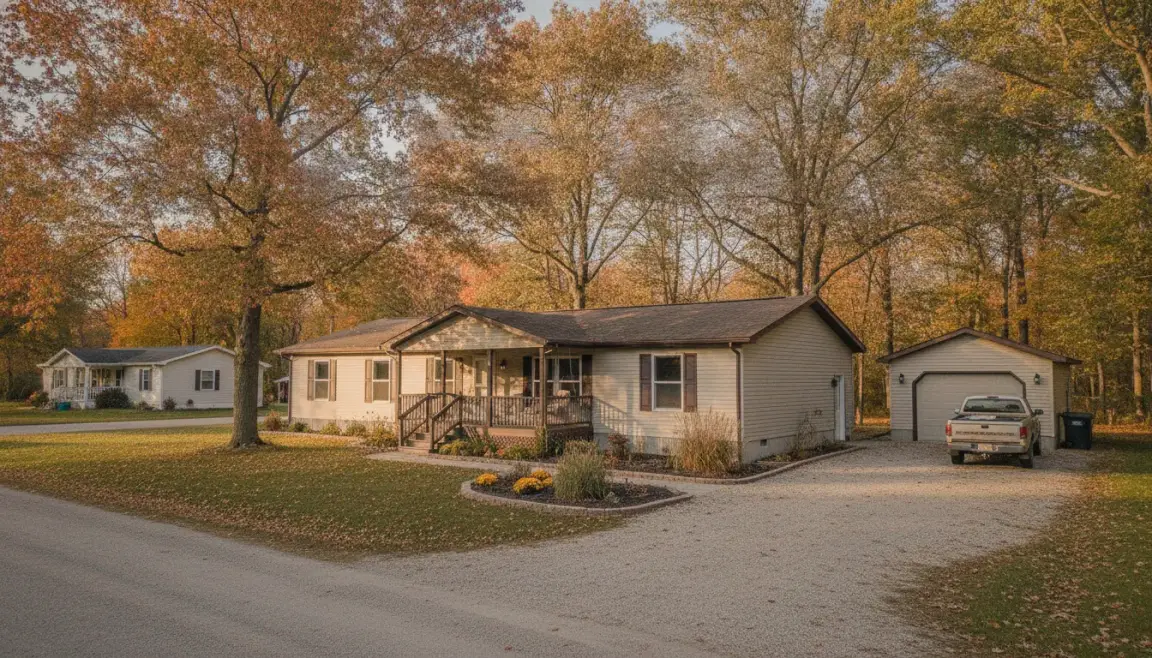

Selling a mobile or manufactured home in Michigan can be straightforward, but the path depends on what you actually own. A home on land you own is handled differently from a home on a leased lot in a manufactured-home community. Title records, liens, park rules, and lender requirements can all affect who can buy, what paperwork is needed, and how quickly the sale can close.
Request a no-obligation cash offer for your Michigan mobile home.

A home and lot review can clarify the best path for a Michigan mobile-home sale.
You may be able to sell mobile home for cash without making repairs, paying agent commissions, or waiting on a traditional mortgage. But a cash offer does not eliminate the need to verify ownership, resolve liens, or follow community and state transfer requirements. A property review can clarify whether the home is a practical fit and what steps come next.
This guide explains the key ownership distinction first, then walks through title and document requirements, financing limitations, and realistic ways to sell. If you need a faster, lower-pressure alternative to listing, M1 Home Buyers is a small local business that evaluates properties as-is. Offers and timelines depend on the home, land, title, and park situation.
Request a no-obligation offer for your Michigan mobile home
How to Sell a Mobile Home for Cash in Michigan.
To sell a mobile home for cash means a buyer evaluates the home and proposes to purchase it without making the sale depend on a conventional mortgage approval. In Michigan, the property may be described as a mobile home or manufactured home. The paperwork can differ based on its age, title status, land ownership, and location.
A cash offer is not the same as guaranteed acceptance. A responsible buyer still needs to confirm that the seller can transfer ownership and that the home can legally remain on, or be moved from, its current site. Before accepting an offer, review four practical checkpoints.
1. Title and ownership
Michigan mobile homes are titled. Since 1978, the document is generally called a Certificate of Manufactured Home Ownership or Certificate of Mobile Home Title. It serves a role similar to a vehicle title. When the home is sold, the owner assigns the title to the buyer, who takes the assigned title to a Secretary of State office for transfer. See the Michigan Secretary of State mobile-home guidance for current title requirements. If the title is missing, resolve that issue early rather than assuming a cash sale can bypass it.
2. Land or lot status
Determine whether you own the land beneath the home or rent a site in a mobile-home community. HUD explains that a manufactured home may be treated as personal property or real estate. A home-and-lot transaction has different requirements when the lot is owned in fee simple. A leased lot introduces a lease, community, and possible relocation review into the sale.
3. Liens and park rules
Outstanding loans, tax issues, or other liens may need to be paid or released at closing. If the home is in a park, check the lease and community rules. The park may have an application, buyer-approval, transfer, or removal process. Michigan’s LARA Mobile Home Section oversees important parts of community licensing and manufactured-housing regulation. Your specific lease and local requirements should be confirmed with the park and the appropriate office.
4. Condition and practical value
A cash evaluation considers the home’s condition, access, age, repairs, occupancy, and whether it can stay where it is. Selling as-is may avoid repairs, cleaning, and repeated showings, but it does not mean every home qualifies or that condition has no effect on the offer.
M1 Home Buyers is a small local Michigan business that reviews these details before making a decision. When a property fits its buying criteria, M1 states that it can provide an offer within 24-48 hours after a walkthrough. It can buy as-is with no repairs, commissions, closing costs, or hidden fees for the seller, and close in 7-21 days. These timelines remain subject to property review and clear paperwork. You can learn more about how the cash-buying process works before deciding whether it suits your situation.
Do You Own the Land or Only the Home?
Before you decide how to sell a mobile home for cash in Michigan, identify what you actually own. Some owners hold both the manufactured home and the land beneath it. Others own the home but rent a site in a mobile home park or manufactured-home community. That difference can affect the buyer pool, the paperwork, the timing, and whether the home can remain where it is after a sale.
HUD explains that a manufactured home may be treated as personal property or real estate, depending on the circumstances. In a home-and-lot transaction, the lot must be owned in fee simple, while the home’s classification can still depend on its title status. If you own only the home, the transaction generally needs to address the home’s ownership separately from the land and the community’s rules.
| Situation | Practical questions | Likely transaction implications | Documents to check |
|---|---|---|---|
| Home and land owned together | Is the lot deeded to you? Is the home attached or otherwise recorded with the property? Are there liens on either asset? | The sale may involve both real property and the home. A title review, deed review, lien payoff, and closing process may be needed. | Deed, property tax records, manufactured-home title or surrender records, loan statements, and recorded liens. |
| Home on a leased lot | Who owns the home? What does the lease say about sale, removal, transfer, notice, and unpaid charges? | The land is not included in the sale. The buyer may need a new lease, an approved lease assignment, or a plan to move the home, depending on the community and contract. | Manufactured-home title, current lot lease, amendments, community rules, payment history, and park contact information. |
| Home in a licensed park or community | Does the community require an application, screening, approval, or buyer eligibility review? Are there community balances or violations? | Park approval or buyer eligibility may affect who can purchase and when possession can change. Confirm the community’s process rather than assuming one rule applies everywhere. | Lease, rules and regulations, sale or transfer policy, written notices, account statement, and any inspection or violation records. |
Michigan’s Department of Licensing and Regulatory Affairs, or LARA, oversees important parts of the Mobile Home Commission Act and related manufactured-housing rules. Its Mobile Home Section also handles community licensing and complaints. That does not replace a review of your individual lease. Ask the park or community for its current written transfer requirements, and keep the response with your sale records. For a broader overview of M1’s local team and service area, visit M1 Home Buyers’ company page.
HUD’s guidance also recognizes leased-lot arrangements in manufactured-home communities. Its Title I guidance discusses an initial lease term of three years and advance notice provisions for covered financing. Those details should not be treated as a universal answer for every Michigan lease or cash transaction. Your signed lease, community rules, title, liens, and local requirements control the next steps.
A cash buyer may be able to evaluate the home without making you complete repairs first, but cash does not erase ownership or park requirements. If you are unsure whether you own the land, look for a deed and tax records, then compare them with your title and lease. A Michigan title office, park representative, real-estate attorney, or other qualified professional can help confirm what applies before you sign. This article is general information, not legal advice.
Sources: HUD manufactured-home financing guidance and Michigan LARA Mobile Home Section.
How Do Title, Liens, and Documents Affect the Sale?
Before you promise a closing date, confirm that the ownership and property records support a legal transfer. A cash buyer may reduce financing delays, but cash does not remove Michigan title requirements, lien obligations, or mobile-home-park rules. Use this checklist to identify paperwork issues early.
- Locate the Michigan title. Michigan mobile homes are titled. For homes titled since 1978, the document is identified as a Certificate of Manufactured Home Ownership or a Certificate of Mobile Home Title. It looks like a vehicle title and serves the same basic purpose. If your paperwork says “trailer coach” or uses an older description, do not assume it is unusable. Have the record confirmed with the Michigan Secretary of State. Review Michigan SOS mobile-home title guidance.
- Check the owner name and identifying details. Compare the name on the title with the seller’s identification and purchase records. Also check the home’s serial or identification information. If a former owner is still listed, the transfer may need to be corrected before closing. A previous owner may need to assign the title to the current owner. When an assignment cannot be obtained, Michigan SOS notes that a court order may be necessary.
- Plan the seller assignment and buyer transfer. When an owner sells, the seller assigns the title to the new owner. The buyer then takes the assigned title to a Secretary of State office and completes the transfer application. Michigan SOS lists a $90 fee for an original or transferred mobile-home title. Make sure every required signature and ownership detail is handled correctly rather than signing incomplete paperwork at the last minute.
- Resolve a lost title before setting a firm closing promise. The owner listed on the title can request a duplicate through a Secretary of State office or Michigan SOS Online Services. The published cost is $15, and the duplicate is mailed within 14 days. Same-day title service is not available for mobile-home titles. That timeline can affect a proposed closing date, so begin the request as soon as you discover the problem.
- Identify liens and obtain payoff or release information. Review loan statements, security interests, and any other records showing that money is owed against the home. Ask the lienholder what is needed for payoff and how the lien release will be documented. Do not represent that the home can transfer free and clear until the required payoff and release process is understood. If the lien record is unclear, confirm the next step with the lienholder or a qualified professional.
- Gather purchase, lease, and park records. Collect your bill of sale, purchase agreement, loan documents, land records if you own the lot, and any park or community lease. If the home sits on leased land, ask the park about its transfer, buyer-approval, removal, or balance requirements. The home and the land may be treated differently, and the park’s records can affect what a buyer is actually able to purchase.
- Share the complete file for review before signing a closing promise. Missing paperwork does not always mean the sale is impossible, but it can change the timeline, costs, or available options. Provide the title status, lien information, and park or land documents for review before agreeing to a specific closing date. Michigan title and local lease details should be confirmed with the proper office or a qualified professional. This is general information, not individualized legal advice.
Why Can Financing Make a Manufactured Home Harder to Sell?
Financing a manufactured home can involve more conditions than financing a typical site-built house. The key question is not only what the home is worth, but also how the home is classified. What land is included, and whether the property meets a lender’s requirements.
HUD explains that a manufactured home may be treated as personal property or as real estate. When a lender treats the home as personal property, the loan is commonly called a chattel loan. It is secured by the home itself, not the land beneath it. That can apply when the owner leases a lot in a manufactured-home community or mobile-home park. A mortgage, by contrast, is generally connected to real estate and may involve both the home and land.
This distinction can narrow the pool of available lenders and buyers. In a CFPB report based on national Home Mortgage Disclosure Act data collected beginning in 2018, around 42% of manufactured-home purchase loans were chattel loans. The report also found that chattel loans generally carried higher interest rates and fewer consumer protections than mortgages. In the data cited by the CFPB, less than 30% of manufactured-home loan applications were approved, compared with approval rates above 70% for site-built-home loans. Those figures describe the report’s national lending data and are not a prediction about a particular Michigan home. Read the CFPB manufactured-housing financing report for the source context.
Land, foundation, and appraisal can affect approval
A lender may review whether the borrower owns the land, leases the site, or is buying the home and lot together. HUD’s guidance distinguishes a home-and-lot transaction where the lot is owned in fee simple from a unit placed on a leased lot. A lease, park rules, transfer process, and possible community approval may all matter to the transaction.
The home itself may also need to satisfy installation, foundation, site-suitability, water, sewage, and state or local requirements. HUD identifies these requirements in its manufactured-home financing guidance. If the foundation documentation is incomplete, the appraisal cannot support the loan, or the home does not fit a lender’s property standards, financing may be difficult. This can happen even when the seller and buyer agree on a price.
Why a cash sale may reduce one obstacle
A cash buyer does not need to wait for mortgage underwriting. It also does not depend on a lender’s appraisal approval. A cash route can reduce financing contingencies. It does not erase the other steps. The seller still needs to establish ownership, resolve liens, follow title-transfer rules, and address any park, lease, relocation, or transfer requirements. A cash buyer should review those details before promising a purchase or closing date. M1 explains its general cash-buying process for homeowners who want to understand the next steps.
If you want to sell mobile home for cash, gather the title, loan or lien information, land or lot agreement, and park contact details first. State and local requirements can vary, so confirm unclear title or lease questions with the appropriate office or a qualified professional. M1’s frequently asked questions page may also help you frame your initial questions.
What Is the Best Way to Sell a Mobile Home for Cash in Michigan?
The best route depends less on a single “best” method and more on what you own, how quickly you need to move, and what the home requires. If you want to sell mobile home for cash, start by comparing three practical options: a traditional listing, a direct sale, or a no-obligation cash evaluation.
When a traditional listing may fit
A traditional listing may fit when the home is in good condition and the title records are organized. It may also fit when the park allows the transfer and you can wait through marketing, showings, financing, inspection, and closing. This route may provide broader exposure, but commissions, preparation costs, repair requests, and financing delays can reduce convenience. It is also important to confirm whether the sale includes the land or only the home.
When a direct sale may be simpler
A direct sale can be a better fit when speed, privacy, or certainty matters more than managing a traditional listing. It may help owners dealing with an older home, deferred maintenance, vacancy, relocation, or a park situation that makes ordinary marketing difficult. You can read more about selling your mobile home directly for a Metro Detroit-focused look at this option.
A direct sale does not eliminate necessary checks. In Michigan, mobile homes have titles. The Secretary of State identifies titles issued since 1978 as a Certificate of Manufactured Home Ownership or Certificate of Mobile Home Title. The seller still needs to establish ownership, address liens, and complete the required transfer. See the Michigan Secretary of State guidance for title requirements.
What to check before choosing a cash evaluation
Ask whether you own the land or rent a lot in a manufactured-home community. Review the lease, park rules, approval requirements, unpaid lot rent, and any restrictions on moving or transferring the home. Also gather the title, purchase or payoff records, tax information, and lien details. HUD explains that a manufactured home may be treated as personal property or real estate, so the ownership structure can affect the sale process. You can review its manufactured-housing guidance.
Condition matters, too. Be direct about water damage, structural concerns, additions, code issues, missing title documents, or needed relocation. During a walkthrough, clarify what is included in the sale and whether the buyer is evaluating the home in place. Ask which documents are needed, how park or title issues will be handled, and whether the proposed timeline is realistic. Michigan community and licensing questions can also be confirmed through the Michigan LARA Mobile Home Section.
M1’s local cash process
M1 Home Buyers is a small local business that reviews the home and its circumstances before making a decision. After a walkthrough, M1 can provide an offer within 24-48 hours when the property review is complete. If the offer works for you, closing may happen in 7-21 days, or on another timeline you select. Homes are considered as-is, with no repairs, commissions, closing costs, or hidden fees for the seller when applicable. Eligibility still depends on the title, liens, land or park arrangement, condition, and local review.
Ask M1 Home Buyers about a no-obligation offer before the FAQ.
Frequently Asked Questions
These answers provide general information for Michigan homeowners. Title, land, lease, and park requirements can vary, so confirm your specific situation with the appropriate office or a qualified professional.
What paperwork is needed to sell a mobile home?
Start with the original Certificate of Manufactured Home Ownership or Certificate of Mobile Home Title, your purchase or ownership records, and any lien payoff information. Michigan requires the seller to assign the title, after which the buyer takes it to a Secretary of State office for transfer. If the title is missing, the Michigan Secretary of State says a duplicate costs $15 and is mailed within 14 days: Michigan mobile-home title guidance.
Can I sell the home if I do not own the land?
Often, but the sale may be subject to the mobile-home park’s lease, rules, approval process, fees, and moving restrictions. Tell the buyer whether you own the lot or rent a site, and provide the lease and park contact information. A manufactured home may be treated as personal property or real estate depending on its classification and title status, according to HUD guidance.
Can you sell a mobile home for cash fast?
A cash buyer may be able to move faster because the transaction does not depend on a mortgage approval. But title, lien, park, and ownership requirements still have to be reviewed. A realistic timeline depends on the documents, property condition, community rules, and the buyer’s evaluation. Do not rely on a promised closing date until those details are confirmed.
Are mobile homes hard to resell?
They can be, especially when the title is unclear, a lien remains, the home sits on leased land, or park rules limit buyers, repairs, or relocation. Financing can also narrow the buyer pool. The CFPB reports that about 42% of manufactured-home purchase loans are chattel loans secured by the home rather than the land. These loans generally have higher interest rates and fewer consumer protections. See the CFPB manufactured-housing financing report for details.
Do I need a real estate agent to sell a mobile home?
No, an agent is not automatically required. You can explore a direct sale, work with a specialized professional, or list the home through a traditional channel. Whichever route you choose, confirm the title transfer, lien status, land or lease rights. And park requirements with the Michigan Secretary of State, the community, or a qualified professional before signing.
Ready to Explore a Cash Sale?
If you have questions about your title, land status, park rules, or the next paperwork step, a property review can help clarify your options. M1 Home Buyers is a small local business that can evaluate your Michigan mobile or manufactured home based on its specific details. To get started, request a no-obligation cash offer or schedule a walkthrough, or call (248) 970-1051. Details such as ownership records, liens, and community requirements will guide the review.