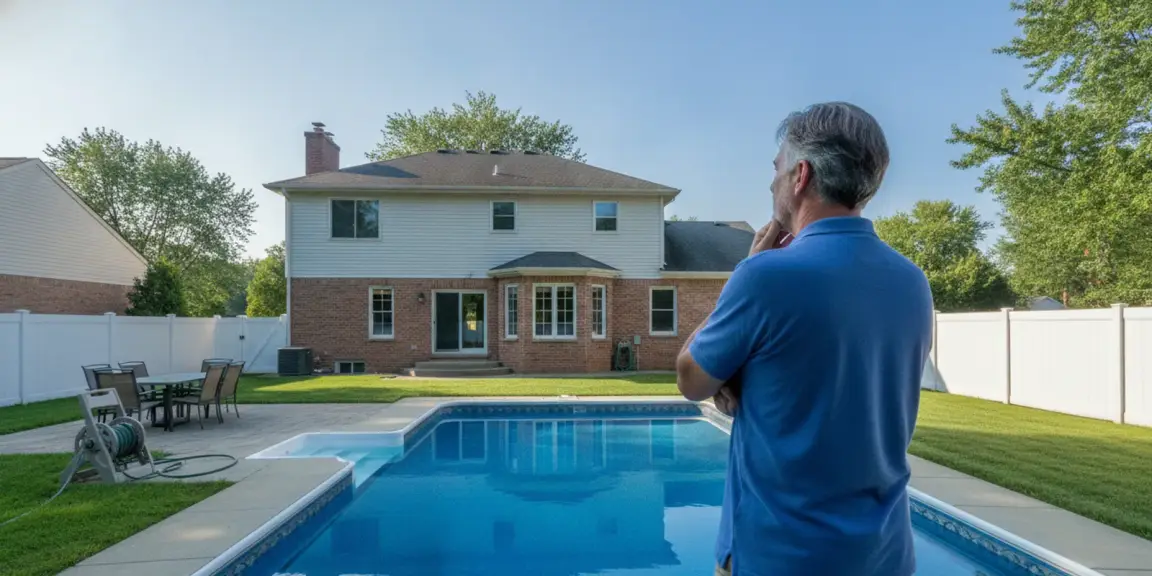

If you plan to sell house with pool Michigan, you do not have to begin by scheduling a major renovation. First, understand the pool’s condition, gather the records you have, and compare the likely effort of repairs with the sale route that fits your priorities. The right choice depends on the pool, the rest of the property, your timing, and what you want to manage.
Ask about your selling options
What makes a pool a buyer question?
A pool is an added feature, but it is also equipment and ongoing work. A buyer may want to know whether it is usable, what has been maintained, and whether any problems are known. The answers can shape a conversation about inspection, repairs, timing, and the overall condition of the home.
There is no single pool condition that determines whether you can sell. A well-maintained pool with records presents a different set of questions from a pool that has not been opened in years, has visible damage, or has equipment that does not operate. Even when the pool is not the center of the transaction, it is part of the property and should be described honestly.
Think about the pool in several separate parts:
- Pool shell or liner: Look for visible cracks, tears, loose coping, unusual water loss, or other concerns you have noticed.
- Equipment: Note the known condition of the pump, filter, heater, lights, and controls. Do not assume something works because it is present.
- Surrounding area: Check the deck, steps, gates, fencing, and nearby drainage for visible wear or issues.
- Care and seasonal status: Record when it was last opened, closed, serviced, or winterized, if you know.
- Paperwork: Collect service receipts, warranties, manuals, permits, or pool-related plans you already have.
This is a preparation list, not a substitute for a qualified inspection. Do not climb into equipment, remove covers, or try to test a system if doing so could be unsafe. If you are uncertain about a defect or repair, ask an appropriate pool professional to assess it.
Should you repair the pool before selling?
Repairing a pool can make sense when a specific, manageable issue is likely to interfere with a buyer’s confidence or use of the property. But a large project can also take time, require coordination, and reveal additional work. Before committing, identify the problem and get a written scope or estimate from a qualified professional rather than relying on a guess.
Start with the questions that matter to your decision. Is the pool currently operating? What repair is actually needed? Can it be completed before your preferred sale date? Will the work address the known issue, or is it only cosmetic? Do you have the money and time to manage contractors and follow-up? A simple comparison can keep the decision grounded.
| Option | What you may do | Potential fit | Questions to weigh |
|---|---|---|---|
| Repair before listing or sale | Get an assessment, agree on a defined scope, and complete selected work. | A known issue is limited, repair timing works, and you want to present a functioning pool. | What is included in the estimate? Could more work be needed? How will timing affect the rest of the sale? |
| Sell with the pool as-is | Share what you know about its condition and let prospective buyers assess it. | You prefer not to manage repairs or the pool needs substantial work. | What condition details should be shared? Will a buyer request an inspection or address the pool in negotiations? |
| Explore a direct sale | Discuss the property and pool condition with a direct buyer before deciding. | You want to compare a less traditional sale path or avoid preparing the home for showings. | How is the property evaluated? What is included in writing? What timing and costs apply? |
The table is a decision aid, not a promise about what a buyer will accept or what a repair will cost. Actual costs and buyer responses depend on the pool and the transaction. For a broader look at selling a property without completing updates, see the as-is home sale information.
What should you disclose about a pool?
Answer property-condition questions truthfully and carefully. If you know the pool has a leak, a broken pump, a damaged liner, or another issue, do not describe it as working or repaired unless that is accurate. If you do not know whether a component functions, say that you do not know rather than guessing. Keep copies of reports and repair records, and distinguish a professional’s finding from your own observation.
Disclosure requirements and forms can depend on the transaction and applicable law. Michigan homeowners should use the current required documents for their situation and seek qualified legal advice when unsure. The Institute of Continuing Legal Education’s discussion of seller disclosure statements describes the importance of answering condition questions and reporting known issues. It is background reading, not a replacement for current legal advice or the forms that apply to your sale.
When you prepare your information, make the difference between these things clear:
- Known condition: Something you have observed or have been told by a service professional.
- Work completed: Repairs or maintenance you can support with receipts, service notes, or other records.
- Uncertainty: A component you have not tested or a condition you cannot confirm.
- Opinion: Your impression of the pool, which should not be presented as a technical assessment.
Do not conceal a known problem with a quick cosmetic fix or assume a buyer will not notice. If the pool is closed for the season, explain that status and share what you know about its most recent operation. If you have no records, do not invent a service history. Accurate, plain answers can help keep expectations clear.
Which pool records should you gather?
Put relevant records in one folder before conversations or showings. You do not need to create paperwork you do not have. Useful items may include:
- Recent pool-service invoices or maintenance notes.
- Repair estimates, paid invoices, and documentation of completed work.
- Equipment manuals, warranties, or model information that came with the pool.
- Any permits, plans, or contractor records you already possess.
- Notes on when the pool was last opened, closed, or winterized.
- Photos that show the current condition, if access is limited or the pool is closed.
Organize the material by date and label estimates separately from completed repairs. If a report identifies a concern, keep the full report rather than summarizing it in a way that could omit context. A buyer may ask follow-up questions, and having documents at hand can help you respond consistently.
Consider a basic visual walk-around, too. Note whether the cover is secure, whether there is visible water around equipment, and whether the deck or fencing has apparent damage. This is not a safety certification or inspection. Avoid presenting a visual check as proof that the pool meets a code or safety standard.
How does the pool affect the sale process?
The pool can influence how you prepare the property, what prospective buyers ask, and what gets discussed after an inspection. A conventional listing may involve cleaning, photographs, showings, and buyer inspections. If repairs are recommended, the parties may need to discuss who will complete them, whether the transaction terms change, or whether the buyer proceeds. No particular outcome is automatic.
A direct sale is another route to compare. Ask how the buyer evaluates the home and pool, whether you need to make repairs or prepare for multiple showings, what costs or fees apply, and how the closing date is determined. Request the terms in writing and take time to review them. A direct sale is not automatically the best financial choice; it is one option whose convenience and terms should be weighed against other routes.
To understand the steps involved in M1 Home Buyers’ process, review how the home-buying process works. You can also compare a direct investor sale with listing through an agent using the sale-route comparison. Compare more than the pool repair alone: consider the overall condition, preparation, timing, transaction costs, and your own priorities.
How can you compare your options fairly?
Write down what you would need to do under each route and what remains uncertain. For a listing, include preparation tasks, expected pool work, time for contractors, and the possibility that a buyer may still request repairs after inspection. For an as-is or direct-sale discussion, ask how the pool condition factors into the evaluation and what written terms would apply. For every route, ask which costs you would pay and what timeline is realistic.
A short decision worksheet can make the comparison more useful. Use the same questions for each option so that convenience in one route does not distract from costs or timing in another. Put confirmed information in one column and estimates or open questions in another.
- Work: What pool or home tasks must happen before the sale, and who will arrange them?
- Cost: Which expenses are known, which are estimates, and which could change after an inspection?
- Access: Will contractors or prospective buyers need to visit, and how often?
- Timing: What is the earliest realistic date for each step, including repairs and paperwork?
- Terms: What happens if an inspection identifies another concern or a repair takes longer than expected?
- Choice: Which parts of the process matter most to you: control of the date, fewer preparations, or completing improvements before selling?
For example, if the pool has not been opened this season, first separate what you know from what you would need a professional to check. Then ask for an assessment if you are considering repairs, while also asking a prospective buyer how an untested pool would be handled. You can compare the actual estimate and written sale terms rather than assuming either that the pool is a major defect or that it has no effect. If you cannot get an assessment quickly, include that uncertainty in your timeline instead of promising a repair date.
Keep the comparison flexible. You may decide that a limited repair is worthwhile, or that you would rather disclose the condition and avoid taking on the work. The goal is not to make the pool look perfect on paper. It is to understand the choices, questions, and commitments before you select a route.
Do not compare a repair estimate with an assumed sale price as if either were certain. Get professional estimates where needed, and remember that a buyer’s view of the property can differ from yours. If you have a mortgage, title issue, estate matter, or other legal or financial concern, get advice from a qualified professional who can consider your circumstances.
Owners in Oakland, Wayne, and Macomb counties can also review the company’s Metro Detroit service-area information to see whether their location is covered. If you want to discuss a pool property, share what you know about its condition and ask what details would help assess the home. Start with the contact page or review frequently asked questions before reaching out.
Frequently asked questions
Can I sell a Michigan house if the pool is not working?
A nonworking pool does not by itself tell you whether a sale is possible. Be clear about what is not working and what you know about its condition. Buyers may evaluate the pool, ask for an inspection, or discuss the condition as part of the transaction. The outcome depends on the property and the parties’ terms.
Do I need to repair a pool before I sell?
Not in every sale. A repair may be worthwhile if it is defined and fits your goals, but you can also compare selling without doing the work. Get an estimate for significant repairs, disclose known issues accurately, and ask how each potential sale route handles the pool’s condition.
What if the pool is closed or winterized?
Explain that it is closed and share the last known service or operating information you have. Do not claim that equipment works if it has not been tested. Keep any winterization or service records available, and ask a pool professional if you need a current condition assessment.
Will a pool increase my home’s sale value?
There is no reliable amount that applies to every property. The pool’s condition, maintenance needs, buyer preferences, and the rest of the home all matter. A local real-estate professional or qualified appraiser can discuss market context; a repair estimate can help you understand the cost side of your decision.
What is the next step if I want to sell?
Gather the records you have, make a list of known pool issues, and decide whether you want to price repairs before choosing a route. You can then compare a listing, an as-is sale, and a direct-sale discussion using written terms and a timeline that fits your situation.
Discuss your property and selling options
A clear account of the pool’s condition, paired with a realistic comparison of repairs and sale routes, can help you choose your next step with fewer surprises.