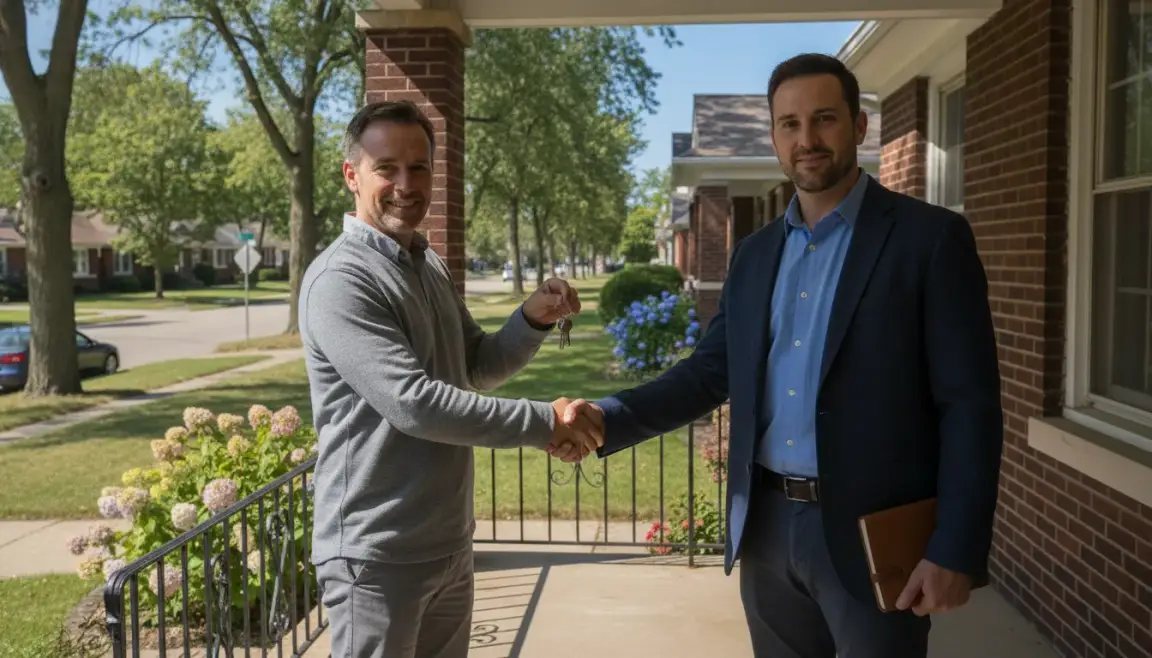

Selling a Michigan home without a realtor can reduce commission costs, but it does not remove the work of pricing, marketing, negotiating, and handling the paperwork. The right path depends on how much control you want, how quickly you need to move, and whether your property needs repairs.
If you are asking how to sell my house without a realtor in Michigan, you generally have four choices: sell it yourself, use a flat-fee MLS service, or work with an iBuyer. You can also accept a direct offer from a local cash buyer. FSBO may save some commission costs. A cash buyer can purchase the home as-is without agent commissions or closing costs.
Before choosing, it helps to separate the legal requirements from the practical tradeoffs. Start with what Michigan allows, then compare the time, costs, paperwork, and convenience of each selling option.
Request a free, no-obligation cash offer while you weigh your options. It costs nothing, and you decide whether the terms work for you.
Can You Legally Sell a House Without a Realtor in Michigan?
Yes. Michigan allows homeowners to sell property without a real estate agent through a For Sale By Owner transaction or a direct sale. You still must follow the same core disclosure, contract, title, and closing requirements that apply to other residential sales. The absence of a realtor does not remove the seller’s legal responsibilities.
A realtor usually helps coordinate pricing, marketing, showings, negotiations, and paperwork. With an FSBO sale, the owner handles those tasks directly or hires separate professionals for specific parts of the transaction. A title company or real estate attorney can help prepare or review documents, confirm ownership, and coordinate the closing. Getting professional help with a complicated title, estate, divorce, or foreclosure situation can reduce avoidable problems.
Michigan seller disclosure requirements
Michigan sellers generally need to provide a seller disclosure statement describing known conditions and features of the property. This can include information about the roof, foundation, plumbing, electrical systems, water damage, environmental issues, and other material conditions. The disclosure should be completed honestly and as thoroughly as possible. It is not a substitute for a home inspection, and it does not require a seller to guarantee that every component works perfectly.
For homes built before 1978, federal law adds lead-based paint disclosure requirements. Before a buyer becomes obligated under the contract, the seller generally must disclose known lead hazards, provide available records. Give the buyer the required lead information pamphlet, and allow the buyer an opportunity to conduct a lead inspection or risk assessment. Review the EPA’s real estate lead disclosure guidance for the applicable federal requirements.
What happens to Michigan property taxes after a sale?
A transfer can also affect the property’s taxable value. Under Michigan’s Proposal A rules, a transfer of ownership generally causes the taxable value to uncap in the calendar year following the transfer. The taxable value may then be reassessed under the state’s applicable rules. This is separate from whether you use a realtor, sell FSBO, or sell directly to a buyer. Read the Michigan Department of Treasury’s change-of-ownership guidance and consult a qualified tax professional about your circumstances.
In short, learning how to sell my house without a realtor in Michigan starts with understanding the legal steps, not simply removing the listing agent. You can choose an FSBO process, a flat-fee listing, or a direct buyer. Compare the paperwork, marketing workload, timeline, and net proceeds before deciding which path fits your situation.
The Four Ways to Sell Without a Realtor in Michigan
Michigan homeowners who want to avoid a traditional listing have more than one path. The right choice depends on how much control, speed, work, and certainty you want during the sale. Here are four common options to compare:
- For Sale By Owner (FSBO): You market the home yourself through sites such as Zillow, handle inquiries and showings, negotiate with buyers, and coordinate the sale. FSBO can reduce the listing-side commission, but it does not automatically eliminate every selling cost. Many sellers still agree to pay a buyer’s-agent commission of roughly 2.5% to 3% when that agent brings the buyer. So weigh that against your expected proceeds before choosing this route.
- Flat-fee MLS service: A flat-fee provider can place your property on the local multiple listing service for a set charge, often with syndication to major real estate websites. This can expand visibility beyond a single FSBO listing while leaving you responsible for pricing, showings, negotiations, buyer communication, and much of the transaction coordination. You may also need to account for a buyer’s-agent commission.
- iBuyer or instant-offer platform: An iBuyer platform may provide a preliminary offer online after collecting property details. This can reduce the time spent arranging showings and marketing, but the final offer, service charges, repair adjustments, eligibility rules, and available locations vary by company. Read the terms carefully and compare the net amount you would receive, not just the initial headline offer.
- Direct local cash home buyer: A direct buyer purchases from you without putting the home through an agent-led listing. M1 Home Buyers is a small local business based in West Bloomfield that buys residential properties directly for cash across Metro Detroit and statewide Michigan. This option may fit owners who value a simpler process, want to sell the property as-is, or need more control over the closing timeline.
Each route still requires an honest, properly documented transaction. Selling without a realtor does not remove the need to disclose known property conditions or complete the necessary paperwork. Depending on the sale, that can include a purchase agreement, deed, settlement statement, and Michigan seller disclosure statement. Homes built before 1978 may also require lead-based paint disclosures. The EPA’s lead-based paint disclosure guidance explains the federal requirement.
FSBO and flat-fee MLS sales can make sense when you are comfortable managing the details and waiting for the right buyer. An iBuyer may offer convenience when your property and location meet its requirements. A local cash buyer can be worth considering when avoiding repairs, repeated showings, or agent commissions matters more than pursuing the highest possible open-market price. The important comparison is the complete net outcome, including time, fees, work, and certainty, rather than the listing method alone.
What Selling Without a Realtor in Michigan Really Involves
Learning how to sell my house without a realtor in Michigan is not just a matter of putting a sign in the yard. In a For Sale By Owner transaction, you become responsible for the work a listing agent would normally coordinate. That can reduce some commission costs, but it also requires time, organization, and careful decision-making.
First, you need to price the property realistically. That means reviewing comparable homes, accounting for condition, and understanding how location affects buyer demand. Pricing too high can leave the home sitting on the market. Pricing too low can reduce your proceeds. A professional appraisal or local market analysis may help, but you still make the final pricing decision.
Next comes marketing. FSBO sellers commonly use online real estate portals, social media, photography, yard signs, and sometimes a flat-fee MLS service. A flat-fee MLS listing typically costs about $100 to $500, depending on the package and services included. MLS exposure can increase visibility, but you still need to write the listing, respond to inquiries, coordinate showings, and keep the property presentable. These efforts can require a significant investment of the seller’s time.
You also handle buyer screening and negotiations. Not every person who asks to see the home is ready, qualified, or serious. You may need to verify proof of funds or financing, decide which contingencies to accept, negotiate inspection requests, and track deadlines. Even after agreeing on a price, the buyer’s financing or inspection can change the transaction. The National Association of Realtors reports that FSBO sales represent a small share of home sales in its 2024 Profile of Home Buyers and Sellers.
The paperwork is another major responsibility. Before accepting an offer, consider having a Michigan real estate attorney or qualified closing professional review the documents and process. The required paperwork may include:
- A purchase agreement stating the price, included items, contingencies, deadlines, and responsibilities of each party.
- The Michigan seller disclosure statement, which gives the buyer information about known conditions and features of the property.
- A lead-based paint disclosure for most homes built before 1978, along with the federally required information about possible lead hazards.
- The deed transferring ownership to the buyer.
- A closing or settlement statement showing the sale price, credits, prorated items, fees, and final amounts due.
Finally, you must coordinate the closing, confirm that title issues are addressed, and make sure every deadline is met. Selling independently can be a good fit for an experienced seller who has time to manage the process. If you would rather avoid repeated showings, repairs, buyer screening, and much of the marketing work, a direct sale to a local cash buyer offers a different path. The important step is comparing the responsibilities, costs, and level of control before choosing.
Selling by Owner vs. Selling to a Local Cash Buyer
If you are researching how to sell my house without a realtor in Michigan, the biggest difference is who carries the work and the risk. A For Sale By Owner transaction can reduce listing costs, but you manage pricing, marketing, showings, negotiations, and much of the paperwork yourself. A direct cash sale trades some market exposure for a simpler, more predictable process.
Neither route is automatically right for every homeowner. FSBO may make sense when you have time, a marketable property, and confidence handling buyer questions. A local cash buyer may fit better when the home needs repairs, your timeline is tight, or you want to avoid repeated showings.
| Consideration | Selling by owner | Local cash buyer |
|---|---|---|
| Who handles the work? | You handle pricing, marketing, showings, buyer screening, negotiation, and coordination with the closing professionals. | The buyer evaluates the property and coordinates the direct purchase process. You can avoid listing preparation and repeated showings. |
| Repairs needed | You may need to clean, stage, and repair the home to attract buyers and support your asking price. | M1 Home Buyers purchases homes as-is, so you do not need to complete repairs or cleaning before receiving an offer. |
| Commissions and fees | You may save a listing commission of roughly 2.5% to 3%, or about $8,000 to $17,000 on a typical home. However, many FSBO sellers still pay a buyer’s-agent fee. | M1’s offer includes no agent commissions, closing costs, or hidden fees. The offer price is what you receive. |
| Closing timeline | The timeline depends on finding a buyer, completing inspections, and the buyer’s financing and closing schedule. | M1 can close in 7 to 21 days, or on a timeline that works for you. |
| Offer certainty and main risk | You may reach more buyers, but a buyer can negotiate heavily, fail to obtain financing, or leave you managing a sale that takes longer than expected. | You receive a direct cash offer based on the home’s as-is condition. Compare the terms carefully, and accept only if they fit your goals. |
Do not overlook the paperwork and tax questions
FSBO does not remove the legal steps involved in a Michigan home sale. You still need the purchase agreement, deed, settlement statement, seller disclosures, and any required lead-based paint disclosure for a pre-1978 home. A title company or real estate attorney can help review the documents, even when no realtor is involved.
Taxes also deserve separate attention. The IRS says eligible homeowners may exclude up to $250,000 of gain when single. Or up to $500,000 when married filing jointly, if they meet the ownership and residence rules. Generally, that means living in the home as a primary residence for at least two of the previous five years. Review IRS Publication 523 or ask a qualified tax professional about your situation.
The practical choice comes down to control versus convenience. FSBO gives you control over marketing and buyer selection, while a direct sale can reduce preparation, cost uncertainty, and scheduling pressure. A reputable local buyer should explain the offer clearly and give you room to decide without obligation.
Why a Local Cash Home Buyer Is the Lowest-Hassle Way to Sell Without a Realtor
For Michigan homeowners who want to avoid the traditional listing process, a direct cash buyer removes many of the tasks that make a home sale stressful. There is no listing preparation, no open house schedule, and no parade of prospective buyers through your home. Instead, you discuss the property directly with the buyer, review an offer, and decide whether the timeline and terms work for you.
This can be especially helpful when the house needs work, the owner is dealing with a vacancy, or life circumstances make a drawn-out sale difficult. A direct buyer evaluates the property in its current condition. You do not have to spend weeks cleaning, staging, making repairs, or coordinating contractors before asking what the home may be worth.
No showings, repairs, or listing process
A traditional sale usually requires marketing, photographs, showings, negotiations, and preparation for inspections. Even a for-sale-by-owner transaction leaves those responsibilities with the homeowner. You may need to answer repeated questions, coordinate access, and keep the property ready for visitors while continuing to live there.
A local cash buyer offers a simpler alternative. The buyer can review the home’s condition as-is, so you are not expected to repair cosmetic damage. Clean out every room, or update outdated features before receiving an offer. You also avoid the disruption of repeated showings and open houses. For homeowners searching for how to sell my house without a realtor in Michigan, that reduced coordination can matter as much as the closing date.
Clear costs and a closing date you control
With a direct cash sale, there are no agent commissions, no closing costs charged to the seller, and no hidden fees. The offer price is the amount the seller receives. That clarity makes it easier to compare the offer with the time, repairs, marketing expenses, and buyer-agent costs that can arise in a for-sale-by-owner transaction.
The timing is flexible as well. M1 Home Buyers can often close in 7 to 21 days, depending on the seller’s needs and the transaction details. If you need more time to move, organize an estate, or make other arrangements. The closing date can be discussed around your timeline rather than dictated by a buyer’s financing schedule.
A local, no-pressure option in Michigan
M1 Home Buyers is a small, locally owned and operated business based in West Bloomfield. The team buys homes directly for cash in Metro Detroit and across Michigan. Local knowledge helps keep the conversation practical, while the direct process avoids the distance and complexity of an agent-based listing.
The offer is no-obligation. You can ask questions, review the terms, and accept or decline without pressure or repeated sales calls. If this route fits your situation, learn more about how to sell your house for cash in Michigan or review how we buy houses before deciding on your next step.
How to Sell My House Without a Realtor in Michigan, Step by Step
-
Choose your selling route and set a realistic price. Decide whether you want a traditional for-sale-by-owner listing, a flat-fee MLS listing, or a direct sale to a cash buyer. Then review recent comparable sales, your home’s condition, location, and likely buyer demand before setting an asking price. A price that reflects the home’s as-is condition can reduce delays and unproductive negotiations. Selling without an agent can reduce commission costs. But FSBO sellers may still pay a buyer’s-agent fee of 2.5% to 3% when that agent brings the buyer, as outlined in the NAR Profile of Home Buyers and Sellers.
-
Prepare the paperwork before you advertise. Gather the deed, mortgage payoff information, property tax records, and any records for repairs or permits. You will also need a purchase agreement and closing documents, including a settlement statement. Michigan sellers generally must provide a Seller Disclosure Statement unless a specific exemption applies. For a home built before 1978, prepare the required lead-based paint disclosure as well. These documents help a buyer understand the property’s condition and reduce avoidable surprises during negotiations and closing.
Also check the tax implications of the transfer. In Michigan, a change in ownership generally causes the property’s taxable value to uncap in the calendar year after the transfer. Review the state’s property tax guidance on ownership changes and ask a qualified tax professional about questions specific to your situation.
-
Market the home or request direct cash offers. If you choose FSBO, create an accurate listing with clear photos, a complete description, and an honest account of known defects. You can use a yard sign, online FSBO portals, social media, or a flat-fee MLS service for broader exposure. Be prepared to answer inquiries, schedule showings, and manage follow-up yourself. Those tasks can require substantial time, especially when buyers have questions or want multiple visits.
If you want to avoid listing and repeated showings, you can instead request a direct offer from a local cash buyer. This route may be useful when the house needs repairs, is vacant, or must sell on a more predictable timeline.
-
Negotiate carefully and vet the buyer. Compare more than the offered price. Review contingencies, inspection terms, earnest money, financing, closing costs, and the proposed closing date. Ask for proof of funds when appropriate, confirm who will handle title work, and consider having a Michigan real estate attorney review the purchase agreement. Without a realtor, you remain responsible for protecting your interests and confirming that the buyer can complete the transaction.
-
Close on a date that works for you. Coordinate with the title company, attorney, lender, and buyer to finish the required documents and transfer the deed. A traditional buyer’s financing can affect the timeline, while a direct cash sale may offer a simpler path. For example, M1 Home Buyers is a small local business that buys homes directly across Metro Detroit and statewide Michigan. M1 can purchase a property as-is, with no agent commission, no closing costs, and no hidden fees. The process can collapse many FSBO steps into a no-obligation cash offer and an as-is closing in 7 to 21 days, with the seller choosing the timeline.
Choosing the Right Path for Your Michigan Home Sale
The best option depends less on a single “right” selling method and more on what you need from the transaction. A homeowner with several months, a marketable property, and confidence handling buyers may prefer FSBO or a flat-fee MLS listing. These routes can provide broad exposure, but you handle pricing, showings, negotiations, and much of the paperwork.
An iBuyer may offer a more streamlined process, but availability, property criteria, fees, and offer terms vary by company. Review the complete offer carefully, including service charges, repair adjustments, and the closing timeline. A direct local cash buyer can be worth considering when certainty and convenience matter more than testing the highest possible list price.
Match the option to your timeline and property
- You have time and want to pursue the highest possible price: FSBO or flat-fee MLS may fit if you are prepared to market the home, coordinate showings, negotiate, and manage buyer questions. You may avoid some commission expense, but your time and any buyer-side fee still affect the final result.
- Your home needs repairs or extensive cleanup: A direct cash buyer may be more practical than paying for updates before listing. Cash buyers such as M1 Home Buyers purchase homes in as-is condition, so you can avoid making repairs simply to prepare for the market.
- You want exposure but less marketing work: A flat-fee MLS service can put your property in front of MLS-connected buyers while leaving you responsible for communication, negotiations, and many transaction details.
- You need a predictable, low-hassle sale: A reputable local cash buyer can provide a direct, non-agent alternative without repeated showings. The process should remain transparent and no-obligation, so you can review the offer and decide without pressure.
Consider local knowledge and flexibility
M1 Home Buyers is a small local business based in West Bloomfield. The company buys homes directly from homeowners across Metro Detroit and statewide Michigan, giving sellers another path besides an agent-led listing. That may be especially useful if you are relocating, dealing with an inherited property, facing financial pressure, or simply do not want to manage a traditional sale.
Before choosing, compare the likely net proceeds, work required, repair costs, timing, and risk of delays. If your priority is maximum market exposure, a listed sale may deserve the extra effort. If you need speed, have an as-is home, or value a certain close without showings and agent fees, a local cash buyer may be a strong fit. Review the common questions before deciding, and choose the path that best matches your timeline and comfort level.
Before you close, you may want answers to a few common questions about selling without a realtor in Michigan.
Request your free cash offer today for a no-obligation look at your next steps.
Frequently Asked Questions
Is it legal to sell a house without a realtor in Michigan?
Yes. Michigan allows homeowners to sell directly or use a For Sale By Owner process. You still need to follow applicable disclosure and contract requirements, so consider having a Michigan real estate attorney or title company review the transaction.
What paperwork do I need to sell my house without a realtor?
Plan for a purchase agreement, Michigan seller disclosure statement, deed, and closing documents such as a settlement statement. Homes built before 1978 may also require federal lead-based paint disclosures. See the EPA disclosure guidance for the federal requirement.
Can I list my house on Zillow without a realtor?
Yes. You can market a home yourself through major real estate portals. A flat-fee MLS service may provide broader exposure, but compare its upfront fee, showing support, contract assistance, and any buyer-agent commission before choosing it.
How much can I save by selling without a realtor in Michigan?
You may avoid the listing-agent commission, but FSBO sellers often still negotiate or pay a buyer-agent fee. Compare every marketing, repair, legal, closing, and buyer-agent cost against the expected sale price before deciding.
What is the lowest-hassle way to sell without a realtor?
A direct cash buyer can be a simpler option when you want to avoid repairs, repeated showings, and traditional financing delays. M1 Home Buyers purchases homes as-is, provides no-obligation offers, and lets sellers choose a closing timeline, subject to the agreed transaction details.
Ready to Choose Your Michigan Home Sale Path?
If you want a simpler alternative to managing a traditional listing, you can request a free, no-obligation cash offer and decide whether it fits your plans. M1 Home Buyers is a small local business serving Michigan homeowners with a respectful, low-pressure process. There is no need to commit before reviewing your options. Request your free cash offer when you are ready to get started.
Reach our Metro Detroit and statewide Michigan team directly at (248) 970-1051 for answers to your questions, or start online whenever it suits you.